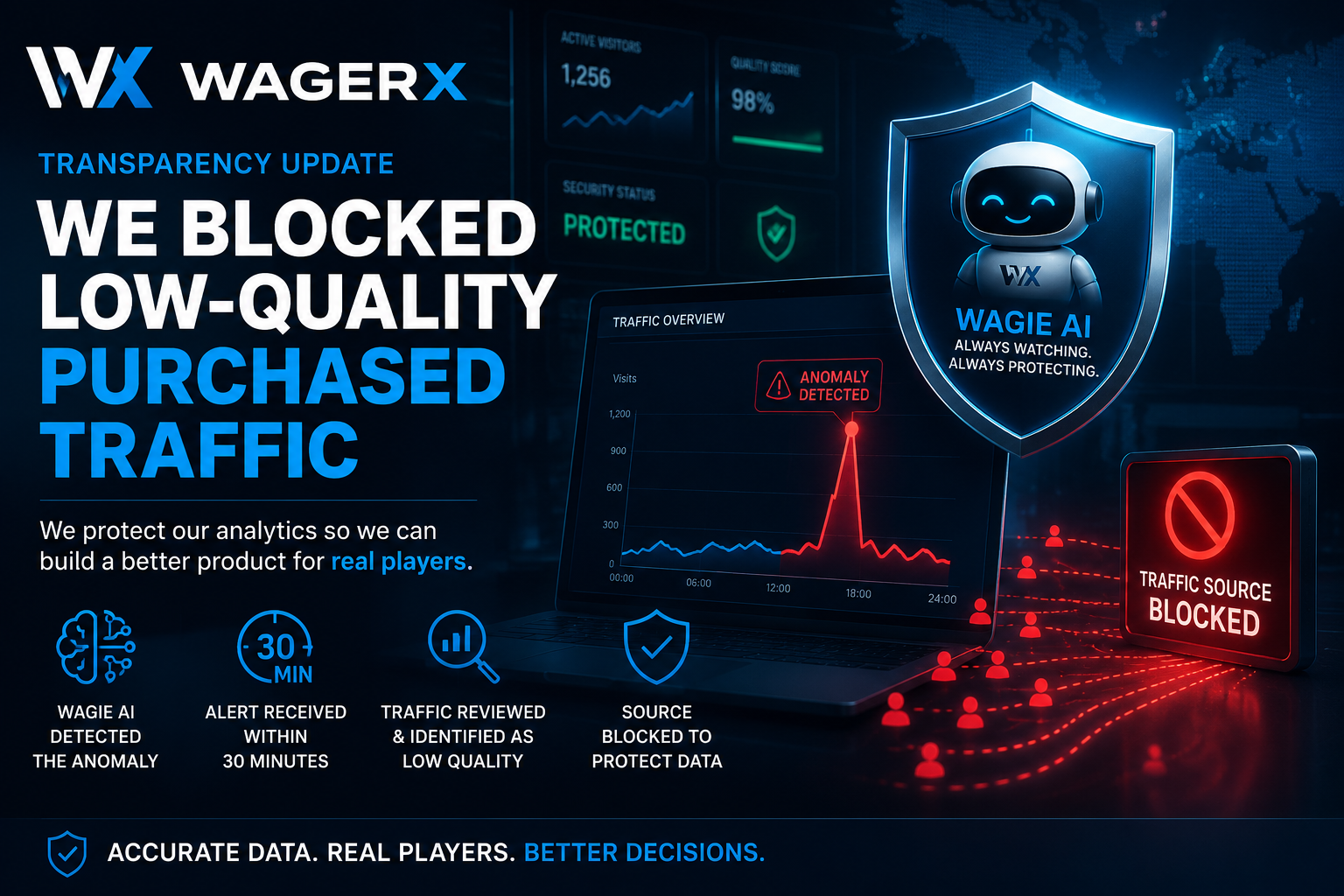
Transparency Update: We Blocked Low-Quality Purchased Traffic
At WagerX, we believe accurate data is worth far more than inflated numbers.
This week, our monitoring systems detected a sudden influx of approximately 1,000 low-quality visits originating from a traffic exchange that did not match our normal audience patterns. Rather than letting that traffic distort our analytics, we reviewed the activity and blocked the source shortly after it was detected.
It's disappointing to see artificial traffic pointed at WagerX. But our priority wasn't where it came from — we're not going to speculate about that — it was protecting the integrity of our data.
Wagie Caught the Anomaly Within 30 Minutes
One genuinely positive outcome from this incident: it showed our internal AI monitoring is doing its job.
Wagie, our AI agent, continuously analyses activity across the site — traffic patterns, user behaviour, bot activity and other operational metrics. When this abnormal spike appeared, it classified the activity as an anomaly and alerted us within 30 minutes.
After reviewing the alert, we confirmed the traffic was low quality and blocked the source at the server level before it could have any meaningful impact on our analytics.
Why We Chose to Block It
Artificial traffic makes visitor numbers look bigger. That's the whole problem.
It provides zero value to our readers, and it quietly poisons everything we use real data for: analytics, performance monitoring, and the long-term decisions about what to build next.
We would rather report fewer genuine visitors than thousands of artificial ones.
Every improvement we make to WagerX is based on real user behaviour — not vanity metrics. If we let purchased traffic inflate the numbers, we'd be lying to ourselves first and to you second.
Wagie Does More Than Watch Traffic
Traffic anomalies are only a small part of what Wagie handles day to day. The same agent that flagged this spike also:
- Cross-checks our live-testing notes against the casino rankings — when we run real-money deposit and withdrawal tests, Wagie verifies that what the ranking tables claim matches what the audit notes actually recorded, so a stale number never survives an audit cycle unnoticed.
- Monitors regulatory sources around the clock — licensing changes, enforcement actions and policy updates feed into our regulatory tracker before most outlets pick them up.
- Answers player questions with live site data — scores, audit dates, bonus terms — instead of guessing from stale training data.
The traffic incident was the first time Wagie's anomaly detection got a real-world test at this scale. It passed.
What We Learned
This incident confirmed two things:
- Our monitoring systems are working as intended.
- Rapid detection lets us respond before abnormal traffic affects our data.
We can't control what happens on the internet. We can control how we respond to it.
Our Commitment to Transparency
Transparency has always been one of WagerX's core principles.
Whether we're auditing crypto casinos, monitoring industry developments, or protecting our own platform, we believe our community deserves honest reporting — even when that means publishing incidents like this one.
We'll continue publishing transparency updates whenever we believe they provide useful insight into how WagerX operates behind the scenes.
Incident Summary
| Issue detected | ~1,000 low-quality visits from a traffic exchange |
| Detection time | Within 30 minutes, by Wagie |
| Action taken | Manual review, then the traffic source was blocked server-side |
| Impact | Analytics protected; visitor statistics remain representative of genuine users |
| Status | Resolved |
Accurate data. Real players. Better decisions.