
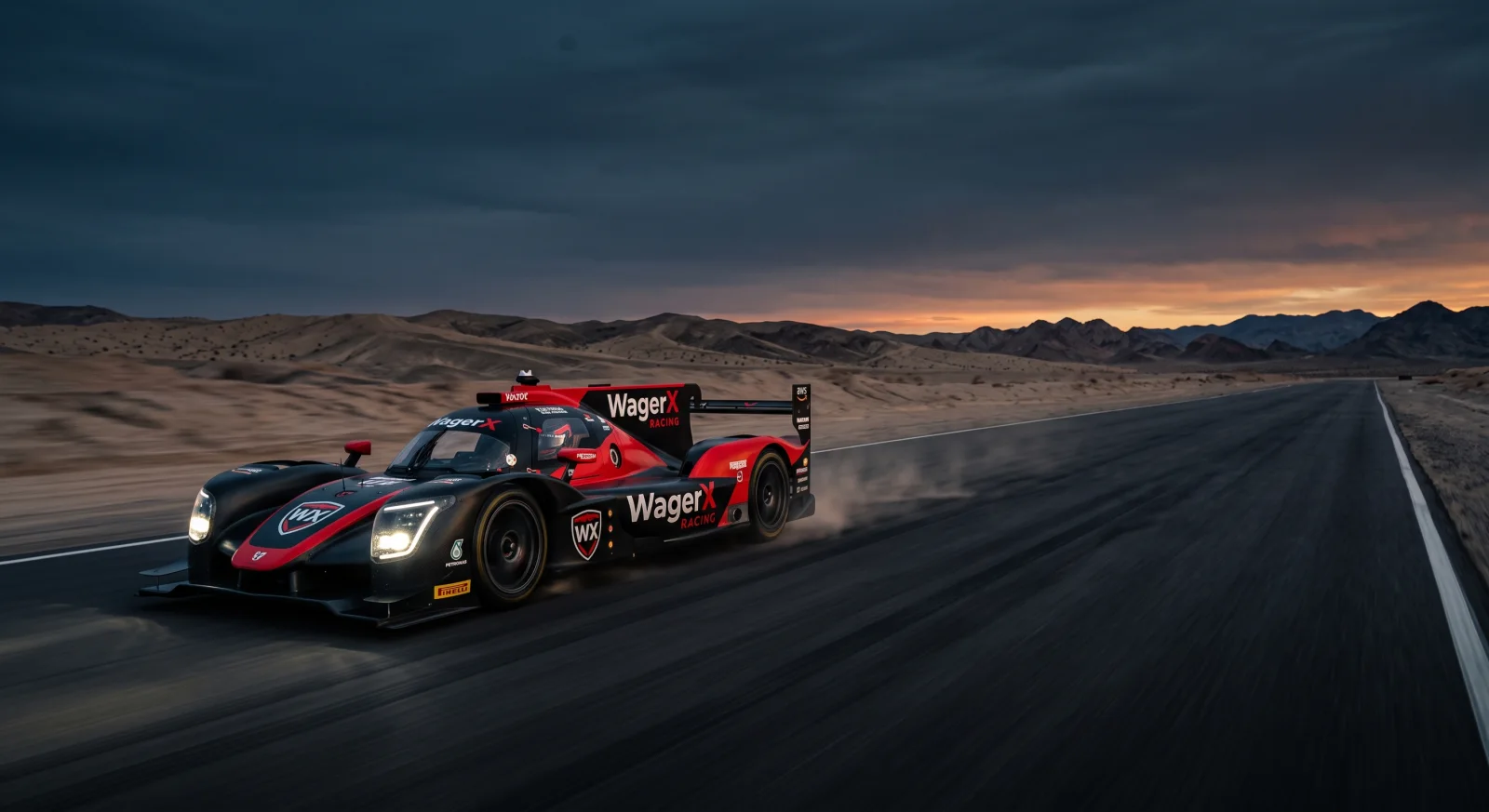
Formula 1 is not one sponsorship market. It is several markets stacked on top of each other.
A company can partner with the championship, buy naming rights with a team, supply technology that affects the racing operation, title an individual Grand Prix or work directly with a driver. Those positions are not interchangeable, even when the end product looks similar on television: another logo, another colour and another piece of trackside real estate.
That distinction matters in 2026. Formula 1 now has 11 teams, Cadillac has joined the grid, new automotive and financial brands are entering, and established partners are moving deeper into team identities.
One sport, four different sponsorship products
The easiest way to understand the commercial system is to split it into four layers.
The logo is the visible output. The commercial product is access: to broadcasts, hospitality, content, fan experiences, corporate relationships and an international audience.
The 2026 grid makes sponsorship part of the name
The official 2026 entry overview contains 11 teams, including new entrant Cadillac.
Several identities immediately show how far sponsorship has moved beyond a sticker on the sidepod:
- Mercedes-AMG PETRONAS combines a manufacturer and a long-running title and technical relationship.
- Scuderia Ferrari HP puts a technology company into one of the strongest names in world sport.
- Oracle Red Bull Racing joins a global software business to Red Bull's own media and consumer brand.
- McLaren Mastercard gives a payments company naming-level visibility from 2026.
- Aston Martin Aramco connects a luxury-car identity with a global energy company.
- Audi Revolut arrives with a financial-technology brand inside the team's 2026 identity.
Those are examples of naming-level relationships, not a complete ranking of partner importance. A fuel supplier, cloud provider or engineering company can be operationally essential without appearing in the team name.
Formula 1's own partners buy a different platform
Above the teams sits the championship portfolio. Formula 1's current partner directory includes companies such as Aramco and AWS, while DHL serves as its logistics partner, Qatar Airways as an airline partner and Pirelli as the exclusive tyre supplier.
The categories matter.
DHL's value is connected to moving the championship between countries. AWS can demonstrate data and cloud use around broadcasts and fan products. Pirelli does not merely buy media: it supplies the tyres every team races on. Its announced contract covers 2025–27, with an option for 2028 — not a guaranteed agreement through the end of 2028.
This is the modern sponsorship model at its strongest: marketing tied to a product that has a credible role in the sport.
Technology has not invaded F1. F1 has become a technology showroom
Every race weekend is a live demonstration of data collection, simulation, remote engineering and time-critical decision-making.
Cars produce streams of telemetry. Teams model tyre degradation and weather, run strategy scenarios, manufacture new components and coordinate trackside operations with factories hundreds or thousands of kilometres away. A technology partner can therefore make a stronger claim than “our logo was seen during the race.”
It can say: our product operated in a public, high-pressure environment where seconds matter.
That is why cloud, cybersecurity, enterprise software, payments and communications businesses continue to appear around the grid. But WagerX applies a simple rule here: if a team or company does not publish the relationship, we do not upgrade internet repetition into fact.
The driver is a second commercial platform
A driver's personal value is related to results, but it is not created by points alone. Nationality, age, language, personality, career history and audience all affect what a brand can build around the relationship.
The cards below are not a valuation or a ranking. They are a dated look at three different commercial stories after Round 12.



The verified Dutch Grand Prix recap records Norris ahead of Antonelli and Russell, with Russell winning the Sprint. That evidence-backed result is the version used throughout this feature.
Mercedes can sell the team and two different driver stories
Mercedes-AMG PETRONAS is one of the clearest examples of a layered commercial platform.
PETRONAS is not only a name on the entry. The partnership has long connected title visibility to technical work around fuels and lubricants. Around that sits a wider group of technology, engineering, finance and consumer relationships.
Then there are the drivers.
Antonelli leads the championship snapshot on 242 points. Russell is second on countback in the WagerX table, level with Lewis Hamilton on 183. A sponsor can therefore work with the prestige and industrial identity of Mercedes, the emergence of a young Italian leader, or Russell's established profile. Those are related assets, but they are not identical.
Ferrari sells heritage before it sells space
Ferrari occupies a position no other team can fully copy. The manufacturer is already a global luxury and performance brand, so a partner enters a commercial world that extends beyond the championship.
HP's place in the Scuderia Ferrari name shows how valuable that association can be. Charles Leclerc offers continuity with Ferrari's modern era. Lewis Hamilton brings seven world championships and a public identity that reaches into fashion, entertainment and luxury.
Hamilton's value to Ferrari is therefore not explained by his 183 points after Round 12. The larger proposition is the combination of Ferrari, Hamilton and audiences that do not follow every lap of every race.
Mastercard and Revolut bought into new chapters
McLaren and Audi provide two of the clearest naming-partner stories of 2026.
Mastercard's McLaren relationship moved to naming-partner level for the 2026 season. McLaren could combine that identity with reigning champion Norris, Oscar Piastri and one of the grid's most internationally marketable team brands.
Audi entered with Revolut in its team identity. That pairing connects a major automotive entry with a digital-finance company at the start of a new works-team story. Audi's technical relationships with BP and Castrol sit in another category: strategically important to fuel and lubricant development, but not the same commercial position as the naming partner.
This is why a flat “list of F1 sponsors” loses useful information. Two companies can both be vital partners while buying different rights and doing different work.
Oracle, Aramco and the power of existing brands
Oracle Red Bull Racing combines a technology company with a team whose owner is already one of the world's most recognizable sports-marketing businesses. Oracle's cloud and data story can sit beside Red Bull's media, events and performance identity.
Aston Martin Aramco uses a different contrast: British luxury-car heritage and a vast energy business. Fernando Alonso adds another commercial layer through experience, recognition and longevity.
Neither model is just “brand plus logo.” Each combines a team identity, a technical or corporate narrative, and drivers with their own audiences.
LVMH widened the luxury lane
LVMH's arrival as Formula 1's Global Luxury Partner began in 2025 under a 10-year agreement.
The partnership spans maisons including Louis Vuitton, Moët Hennessy and TAG Heuer, but their activations and roles should not be treated as identical. Watches, trophy presentation, travel cases, hospitality and celebratory products can each connect to the championship in a different way.
The strategic signal is clear without exaggeration: Formula 1 is competing for attention not only as a sports property, but as a global entertainment and hospitality platform.
Crypto did not leave Formula 1
The 2021–22 crypto sponsorship rush ended badly for several brands and left the category with a credibility problem. That does not mean every crypto relationship disappeared.
Crypto.com remains Formula 1's official cryptocurrency partner under an extension through 2030, and it continues as title partner of the Miami Grand Prix.
That is a stronger, narrower statement than saying the speculative phase has vanished. Some deals ended; one major championship-level relationship continued. The surviving case is interesting because it is long-term, global and attached to both the championship and a race.
Crypto sponsors also operate inside a harder advertising environment than the logos suggest. Licensing, financial promotions and consumer-protection rules differ by jurisdiction. A global partnership does not erase local compliance.
Betting has an audience — and a regulatory boundary
Motorsport produces the ingredients betting businesses value: scheduled live events, extensive data, team and driver markets, and a global fan base. It also crosses jurisdictions with different advertising rules.
That makes “betting fits Formula 1” an incomplete conclusion. The more important questions are where an operator is licensed, what it may advertise, how it settles markets and whether its rules are clear.
WagerX treats those as verification questions rather than sponsor glamour. You can ask Wagie about the evidence behind a crypto sportsbook, or use the WagerX sportsbook hub to compare the operators we track. Availability depends on your location, and nothing in this article is betting advice.
The next advertising canvas is Monza
The track itself is part of the commercial product. Broadcasts repeatedly show bridges, barriers, pit buildings, timing graphics, podium backdrops and hospitality areas. A race title partner adds another layer by entering the event name.
For the next round, that canvas is Monza.

The circuit page is the correct place for information that changes with the weekend. This article remains a commercial snapshot; the Racing Intelligence hub carries the current championship and next-race status.
What is a sponsor actually buying?
At the simplest level, a sponsor buys attention. But the route from attention to value depends on the company.
- A technology company can demonstrate a product under pressure.
- A payments or finance company can use the sport for trust, access and customer acquisition.
- A luxury group can connect racing with hospitality, scarcity and culture.
- An airline or logistics company can make global movement part of its story.
- A crypto platform can pursue mainstream recognition while navigating tighter advertising rules.
- An energy or fuel company can combine global visibility with a technical programme.
The best partnerships usually have an explanation that survives after the logo is removed. There is a product link, an audience link, an operational role or a credible long-term story.
The sponsorship race is about position, not logo count
Formula 1's commercial landscape in 2026 is not interesting because every available surface has branding. It is interesting because companies are choosing very different positions.
Crypto.com holds a championship-level cryptocurrency relationship. LVMH owns a long-term luxury platform. Mastercard and Revolut entered team identities. PETRONAS, Oracle, HP and Aramco sit inside names fans hear throughout a weekend. Technical suppliers demonstrate products that can matter to performance or operations.
Beneath them sits a wider market of official partners, suppliers, race sponsors and driver endorsements.
The serious question is not “who has a logo in Formula 1?” It is:
What did the company actually buy, what can it credibly prove, and how long can the relationship last?
That is the WagerX view of the 2026 sponsorship race — less interested in the size of a sticker, more interested in the evidence behind the position.
Sources and methodology
This feature was checked on August 24, 2026 against Formula 1's official 2026 team overview and partner directory; first-party announcements from McLaren and Mastercard, Audi, LVMH, Pirelli and Formula 1 with Crypto.com; plus the WagerX racing snapshot validated after the Dutch Grand Prix.
WagerX Racing Intelligence is an independent editorial project. It is not affiliated with, endorsed by or connected to Formula One Group, the FIA, any team or any sponsor discussed above. Formula 1 and team names are used for identification and reporting.