Is crypto gambling legal where you live? The answer is more complicated than a simple yes or no. Cryptocurrency is a payment method, not a gambling license — using Bitcoin or stablecoins does not make a casino legal or illegal by itself. What matters is whether gambling is permitted under your local law and how regulators treat digital assets.
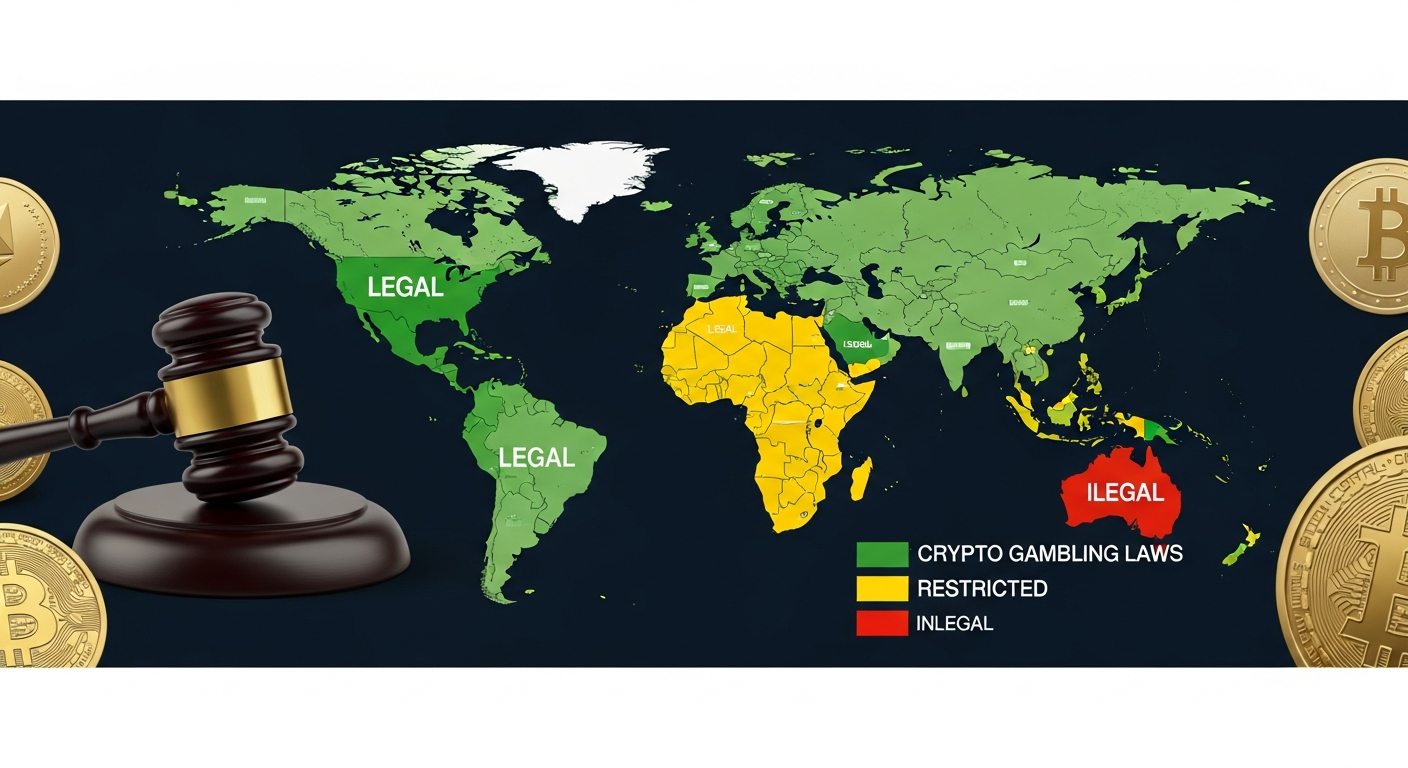
This is the most comprehensive guide to crypto gambling legality in 2026. We have researched every major jurisdiction and sorted them into three categories: Legal (green), Grey Zone (yellow), and Banned (red).
Legal & Regulated Countries
These jurisdictions have clear legal frameworks that either explicitly permit or actively regulate crypto gambling.
Malta — The Gold Standard
Malta has positioned itself as the global hub for crypto gambling. The Malta Gaming Authority (MGA) was among the first regulators to establish a Blockchain Sandbox Framework, allowing operators to test crypto gambling products in a controlled environment. The MGA now issues specialized licenses addressing blockchain-specific concerns such as smart contract auditing and cold storage requirements. If a crypto casino holds an MGA license, that is one of the strongest indicators of legitimacy.
United Kingdom — Regulated but Restrictive
The UK Gambling Commission (UKGC) is one of the most organized gambling frameworks in the world. Licensed operators can accept crypto deposits, provided they implement robust AML protocols. Recent guidance requires operators to verify the source of crypto funds and implement additional KYC procedures for transactions exceeding £2,000. The commission has mandated that operators convert cryptocurrencies to fiat values in player accounts to ensure transparency.
Brazil — The New Frontier
Brazil's regulated gambling market went live in 2025 with a BRL 30 million ($6M) entry fee for operators. This has attracted major international operators and created one of the fastest-growing regulated markets in the world. Crypto is accepted as a payment method under the new framework.
Grey Zone Countries
In these jurisdictions, crypto gambling is neither explicitly legal nor illegal. Players are generally not prosecuted, but operators face regulatory uncertainty.
United States — The Most Complex Jurisdiction
There is no single federal law that says "yes" or "no" to betting with Bitcoin. Cryptocurrency itself is legal — classified as property by the IRS — but gambling laws are handled at the state level. States like New Jersey, Pennsylvania, and Nevada allow online gambling, but most licensed sportsbooks do not accept Bitcoin due to complications with federal laws like the UIGEA (Unlawful Internet Gambling Enforcement Act).
In practice, millions of Americans use offshore crypto casinos. Enforcement focuses on operators, not individual players.
US Tax Note: Crypto gambling winnings are taxable income. If a site pays you in Bitcoin, your income is the dollar value at the moment the coins hit your wallet. If you later sell those winnings, you also owe capital gains tax on any price change.
Nigeria — Massive Market, Regulatory Limbo
Bitcoin betting is happening in Nigeria at a massive scale. Gambling is legal and regulated, particularly sports betting. Cryptocurrency, however, exists in regulatory limbo. The Central Bank of Nigeria has prohibited banks from facilitating crypto transactions. As a result, most crypto betting happens through P2P systems or offshore platforms. Technically legal but practically uncertain.
Australia — Restricted but Active
The Interactive Gambling Act applies to online casino games, but enforcement against individual players accessing offshore crypto casinos is minimal. Australia's focus is on blocking unlicensed operators from advertising to Australians. WagerX implements soft geo-compliance for Australian users.
Banned Countries
In these jurisdictions, all forms of gambling (including crypto) are explicitly prohibited, often with severe penalties.
All gambling illegal. Cryptocurrency banned outright. The government actively monitors and blocks access to offshore gambling platforms.
All gambling religiously prohibited under Sharia law. No exceptions for crypto or any other payment method.
All gambling banned. Despite hosting the 2022 World Cup, Qatar maintains a strict prohibition on all forms of gambling.
Gambling illegal with severe penalties. Cryptocurrency mining is paradoxically permitted, but gambling is not.
Citizens banned from all gambling (including crypto). Foreigners can access domestic casinos. Unique dual system.
Aggressively limits unauthorized remote gambling. MAS oversight makes it extremely difficult for crypto casinos to operate.
Offshore Licensing Hubs — What They Mean
When you see a crypto casino displaying a license, understanding where it comes from matters:
Tier 1. The highest standard. Strict player protection, fund segregation, and dispute resolution. Operates across 150+ countries.
Tier 1. Covers the UK market. Highest compliance standards. Very difficult and expensive to obtain.
Tier 2. Most popular for crypto casinos. Global reach with fewer restrictions. Lower compliance bar than MGA/UKGC but legitimate.
Tier 3. Cheapest entry point. Growing in popularity. Less regulatory oversight but recognized by most crypto casinos.
What WagerX Checks for You
At WagerX, every casino on our verified list is audited weekly. Part of that audit is checking the regulatory status — not just whether a casino has a license, but whether that license is still active, whether the jurisdiction has issued any warnings, and whether the casino has been flagged by any regulatory body.
Ask Wagie about the legal status of crypto gambling in any country. Real-time regulatory intelligence powered by AI.
Ask Wagie AI
Every casino on our list is tested with real money every week. Trust scores, payout speeds, and license checks updated live.
View Verified Casinos
Live monitoring of gambling regulations, license revocations, and country-specific bans across all jurisdictions.
View Tools
Top Verified Crypto Casinos (April 2026)
These casinos have passed our weekly audits and operate under recognized licenses. Each has been tested with real deposits and withdrawals by the WagerX team.
42-second average withdrawal. 21 consecutive clean audits. No KYC. The fastest payout casino we have ever tested.
Visit Coins Game →21 consecutive clean audits. 1-minute average support response. No KYC. Rock-solid reliability since 2015.
Visit Bitsler →Perfect audit history. Instant withdrawals. 1-minute support. No KYC. The quiet achiever of crypto gambling.
Visit Tower.Bet →Telegram-native casino. Active team, daily community rewards. No KYC. Mobile-first experience that traditional casinos cannot match.
Play on TG Casino →View the Full Verified Casino List (35 Casinos) →
2026 Trends to Watch
DAO Casinos: Decentralized Autonomous Organization casinos operate without KYC and without a single operator. They are community-run by players who hold a native token, making them extremely difficult to regulate. Expect major regulatory attention in the coming months.
Stablecoin Dominance: USDT and USDC are overtaking BTC as the preferred crypto gambling currency. Some jurisdictions are considering licensing restrictions based on crypto type — volatile assets vs. stablecoins.
The $81 Billion Market: Crypto casinos processed more than $81 billion in 2024, five times the volume from just two years earlier. Stake's gross gaming revenue of $4.7 billion now rivals traditional betting companies like Entain ($5 billion). Regulators are paying attention.
MiCA Impact: The EU's MiCA regulation is forcing crypto casinos to either comply with full KYC requirements or exit the European market entirely. This is pushing many operators to dual-license (Curacao + another jurisdiction) to maintain global reach.
Core Legal Principles
Three principles apply everywhere:
1. Enforcement targets operators, not players. In most jurisdictions, regulatory enforcement focuses on unlicensed casinos, payment processors, and advertising channels — not individual players.
2. A grey zone does not mean illegal. "Not explicitly legal" usually means there is no clear legislation to permit or prohibit it. This is very different from "banned."
3. A gambling license and an approved payment method are separate issues. A common misconception is that if a casino is licensed, all payment methods are automatically approved. In reality, crypto acceptance is a separate regulatory consideration.